Currently Empty: $0.00

Mobile Crane Types: Which One Is Right for the Job?
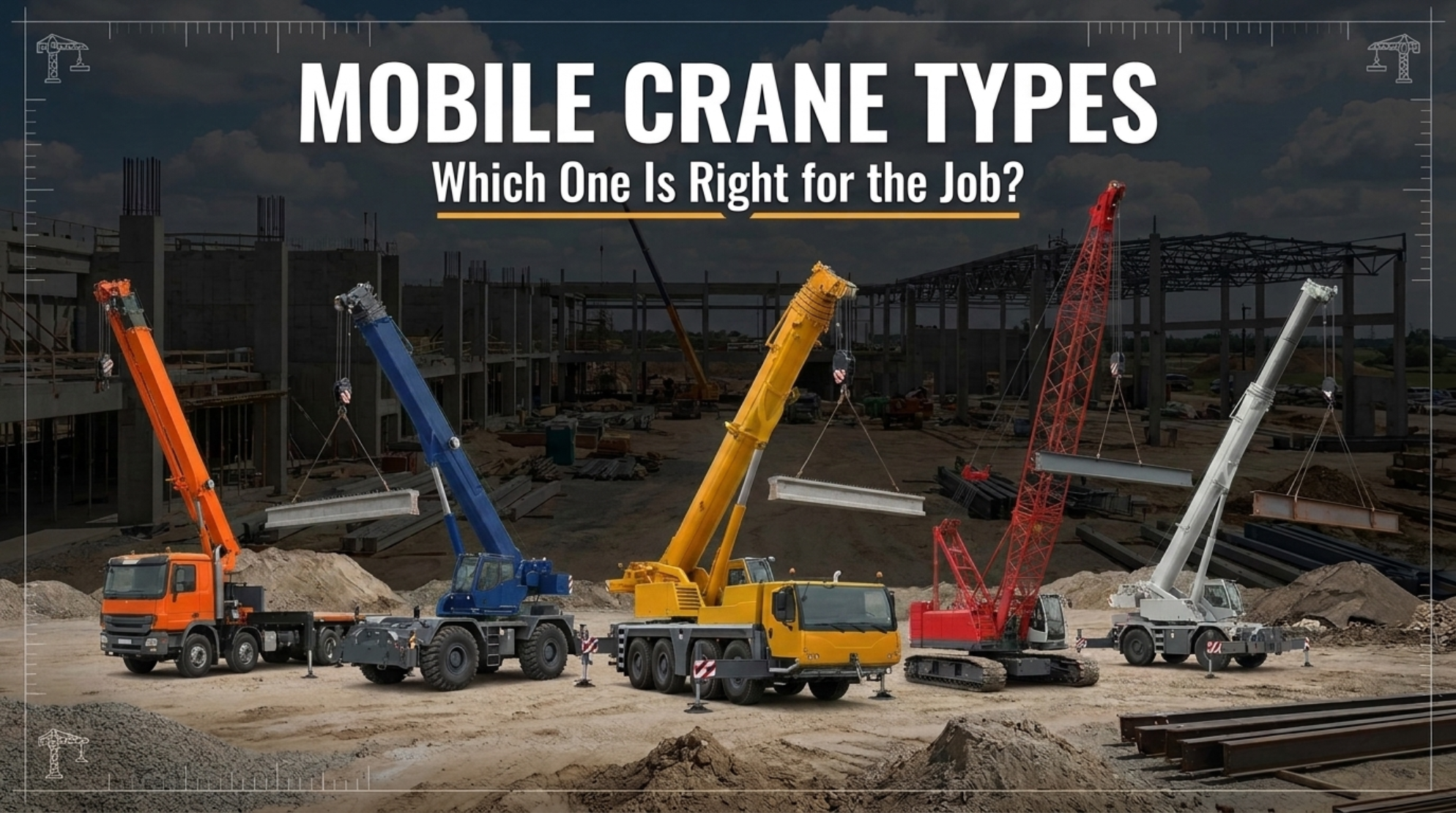
Choosing the right mobile crane can make or break a lifting job. Pick a machine that doesn’t match your terrain, load, or mobility needs, and you’ll face delays, safety risks, and wasted budget. Pick the right one, and the work moves smoothly from setup to final lift. The trouble is that “mobile crane” covers a wide range of machines, each engineered for very different conditions. Some are built to travel quickly between sites, others to crawl across soft ground with massive loads, and still others to reach flexibly at varying heights. Understanding what sets these machines apart is the key to selecting confidently. This post breaks down five common types of mobile cranes: truck-mounted, rough-terrain, all-terrain, crawler, and telescopic. For each one, you’ll learn how it works, where it excels, and the kind of job it’s built to handle, so you can match the right crane to the work in front of you.
Truck-Mounted Cranes
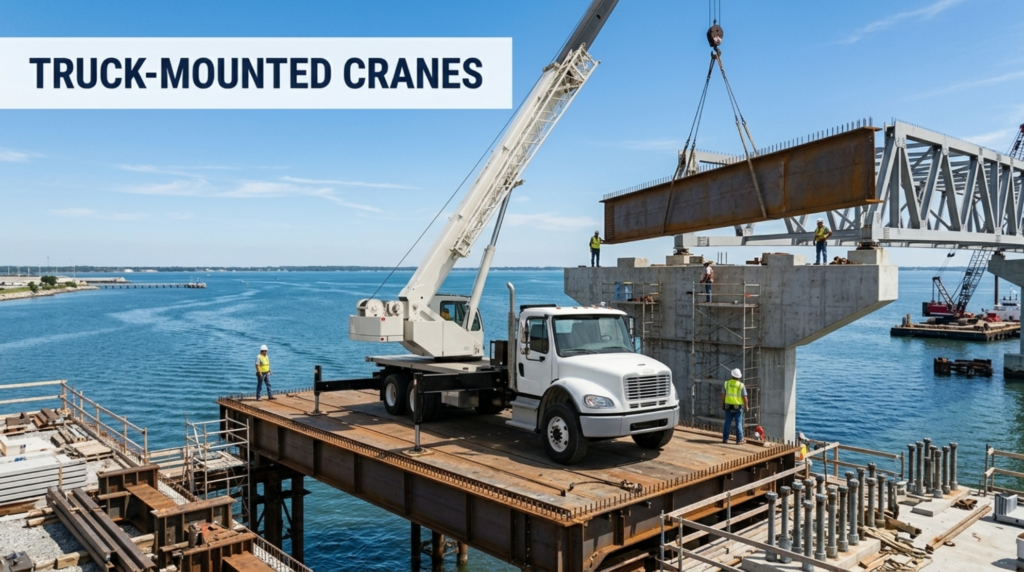
Truck-mounted cranes offer one of the biggest practical advantages in the mobile crane world: easy transport. Because the crane is mounted directly onto a standard truck chassis, it can drive on public roads at highway speeds and move between jobsites under its own power. There’s no need to load it onto a trailer or arrange special hauling for routine relocation. When the work involves lifting at several locations, or lifting jobs that wrap up quickly and move on, that built-in mobility saves considerable time and cost.
This makes truck-mounted cranes ideal for work that requires frequent relocation. Utility crews, service companies, and contractors who travel from one short lift to the next benefit from a machine that arrives ready to work and leaves just as easily. The crane rolls in, sets up, completes the lift, and heads to the next site, all without the logistics that larger cranes demand. That efficiency is a real advantage on jobs where speed and flexibility matter more than maximum lifting capacity.
The trade-off is that truck-mounted cranes are built for roads, not rough ground. Their standard truck chassis performs best on paved or firm, level surfaces, so they’re less suited to soft, uneven, or off-road conditions where other crane types shine. For jobs on prepared sites, along roadways, or anywhere with solid access, though, a truck-mounted crane delivers dependable lifting with unmatched convenience. When your priority is moving quickly between locations and getting set up without delay, this is often the most practical choice available.
Rough-Terrain Cranes
Rough-terrain cranes are purpose-built for exactly the conditions that give truck-mounted machines trouble. Designed to operate on uneven, unpaved, and off-road surfaces, these cranes handle the messy, unpredictable ground that defines so many active construction sites. Their rugged build, heavy-duty tires, and higher ground clearance let them move confidently across dirt, mud, gravel, and rough terrain where a road-going crane would struggle to gain footing.
What makes these cranes so effective on difficult ground is a design focused entirely on off-road performance and jobsite maneuverability. Rough-terrain cranes typically run on a single engine and four large, rugged tires, giving them the traction and stability needed to work on challenging surfaces. Many feature four-wheel drive and four-wheel steering, which lets them navigate tight, congested sites and position accurately even where space is limited. This combination of power and agility makes them a natural fit for construction projects with demanding ground conditions.
Because they’re engineered for the jobsite rather than the highway, rough-terrain cranes aren’t designed to travel on public roads. Moving one between locations usually means transporting it on a trailer, which is the practical cost of their off-road capability. Once on site, though, they excel at what they were built to do:
- Superior off-road mobility, moving across dirt, mud, and gravel with confidence.
- Tight-site maneuverability, thanks to compact dimensions and responsive steering.
- Stable lifting on uneven ground, where prepared surfaces simply aren’t available.
For construction sites with rough, unprepared terrain, this crane is often the dependable workhorse that keeps lifting operations moving.
All-Terrain Cranes
All-terrain cranes bring together the strengths of two worlds: the road-going speed of a truck-mounted crane and the off-road capability of a rough-terrain machine. This versatility is what makes them so valuable on projects that require both travel between locations and work on challenging ground. An all-terrain crane can drive on the highway to reach a jobsite, then transition onto rough or unpaved surfaces to complete the lift, all without the need for separate transport.
That dual capability comes from a design that balances highway performance with jobsite toughness. All-terrain cranes typically feature multiple axles, all-wheel drive, and all-wheel steering, giving them the stability and control to travel at road speeds while retaining the traction and maneuverability needed for difficult terrain. The extra axles also help distribute weight and support substantial lifting capacity, so these machines handle serious loads in addition to covering ground efficiently. It’s a combination that few other crane types can match.
This flexibility makes all-terrain cranes a strong choice for projects that span different environments or require moving between several sites over varied terrain. A contractor working across a large development, or one traveling between locations with unpredictable ground conditions, gains real efficiency from a crane that adapts to whatever surface it encounters. The main consideration is that this versatility comes at a higher cost and greater complexity than single-purpose cranes, so the investment makes the most sense when a project genuinely calls for both road mobility and off-road performance. When your work demands that combination, though, the all-terrain crane delivers dependable capability wherever the job takes it.
Crawler Cranes
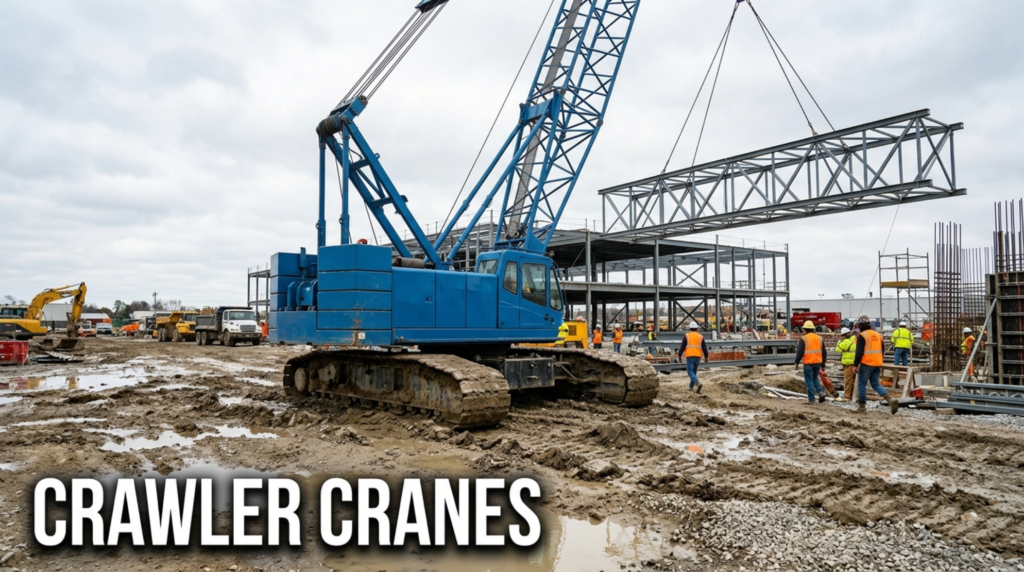
Crawler cranes stand apart from the rest by running on tracks instead of wheels, and that single difference defines everything they do best. The wide, continuous tracks spread the machine’s weight across a large surface area, giving crawler cranes exceptional stability and the ability to work on soft or uneven ground that would swallow a wheeled machine. That stable footing translates directly into impressive lifting capacity, making crawler cranes a go-to choice for the heaviest, most demanding construction work.
Their strengths make them well suited to large-scale, heavy-duty projects. Because the tracks provide such a solid, stable base, crawler cranes can handle enormous loads and often work without the outriggers that wheeled cranes rely on for support. Many can even move short distances while carrying a load, a capability that adds real efficiency on big jobsites where material has to travel across the site. The following qualities are what set them apart:
- Excellent stability, with tracks distributing weight for a firm, dependable base.
- High lifting capacity, suited to the heaviest loads in demanding construction.
- Soft-ground performance, working on surfaces that would bog down wheeled cranes.
The trade-off for all that capability is mobility. Crawler cranes move slowly on their tracks and cannot travel on public roads, so relocating one is a significant undertaking. The crane usually has to be disassembled, transported in pieces, and reassembled at the new site, which takes time and planning. That’s rarely a concern on the large projects these cranes serve, where the machine stays in place for an extended period. For heavy-duty construction that demands stability and lifting power above all, the crawler crane is often the strongest option on the site.
Telescopic Cranes
Telescopic cranes are defined by their signature feature: a boom that extends and retracts like a telescope. This design gives the crane remarkable flexibility, allowing the operator to reach materials at a wide range of heights and distances without changing equipment. The boom is made up of several nested sections that slide out to extend reach and pull back in when a shorter boom is needed, so a single machine adapts smoothly to lifts that vary throughout the workday.
That adjustable reach is what makes telescopic cranes so practical across many kinds of jobs. Whether the task calls for lifting materials high onto a structure, reaching out over an obstacle, or setting a load at a moderate height nearby, the telescoping boom adjusts to fit. Operators can fine-tune the boom length to match each specific lift, which keeps the work efficient and reduces the need for multiple machines on a site with varied lifting requirements. This adaptability is a large part of why telescopic booms appear on so many mobile cranes, including several of the other types covered here.
It’s worth noting that “telescopic crane” describes the boom design rather than a single, distinct machine, and telescopic booms are found on truck-mounted, rough-terrain, and all-terrain cranes alike. What unites them is the flexible, extendable reach the boom provides. When a job involves lifting at changing heights and distances, a telescopic boom offers a straightforward, dependable way to handle that variety with one machine. For projects where reach requirements shift from lift to lift, the flexibility of a telescopic crane makes it a highly practical and efficient choice.
Conclusion
Selecting the right mobile crane comes down to matching the machine to the demands of the job. Truck-mounted cranes deliver easy transport and quick setup for work that requires frequent relocation, while rough-terrain cranes conquer the uneven, off-road ground of active construction sites. All-terrain cranes bridge both worlds, combining highway mobility with off-road capability for projects that span varied terrain, and crawler cranes provide the stability and lifting power that heavy-duty construction demands. Telescopic cranes round out the picture with a flexible, extendable boom that adapts to lifts at different heights and distances. Each type earns its place by excelling in specific conditions, so the smartest choice always starts with an honest look at your terrain, your loads, your mobility needs, and the reach the work requires. Weigh those factors carefully, and you’ll put the right crane on the job every time.